لويس تريخو
Luis Trejo
From the moment I was selected to be part of this project, I knew it would be an interesting challenge. We began by attending knowledge expansion sessions, focusing on Ancient Egypt and the Nahua culture. I also conducted the necessary research by reading the study materials provided by Egyptologist Gerardo Taber, who helped me with my questions.
Week by week, I solidified the concepts, and the more I learned, the clearer and more coherent the ideas became. Likewise, the exercises to enrich our creativity, led by artist Adham Bakry, were an important part of group integration, as they fostered a shared vision of the project and allowed us to recognize the similarities we shared as team members.
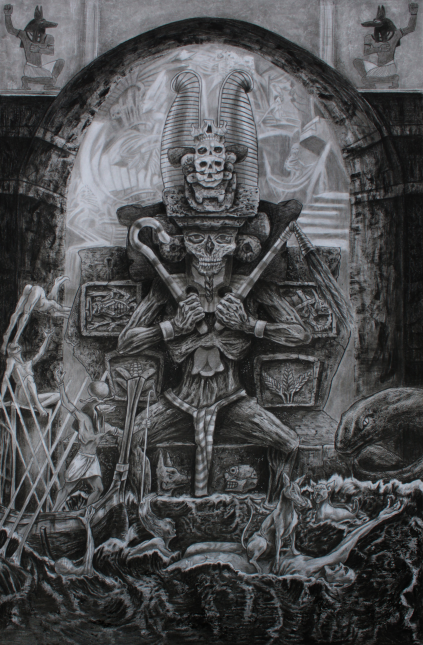
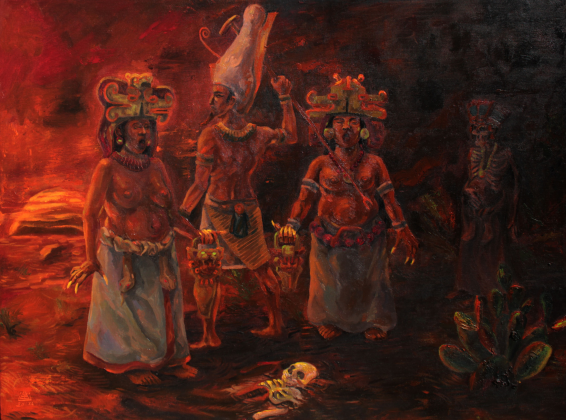
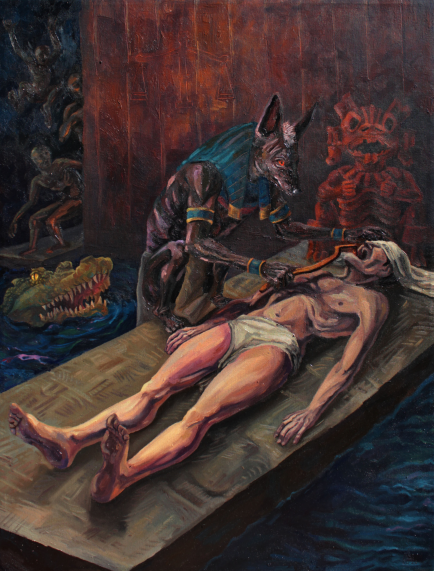
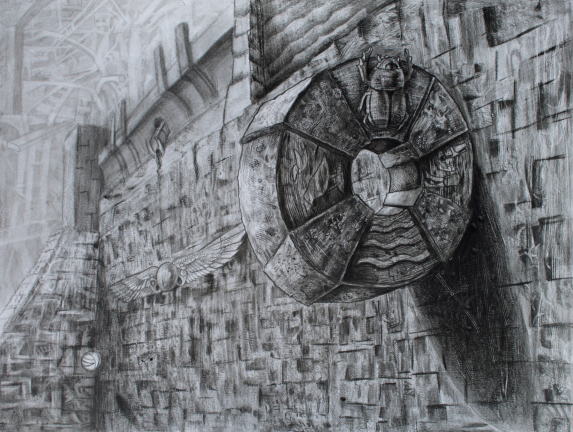
After a few months, the research phase was complete, and it was time to start shaping the ideas. I already had several sketches and a good number of notes written. The main theme was always death. The works emerged gradually: a total of four pieces, two drawings and two paintings, where I captured this hybridization of cultures that already fascinated me. Although I must admit that I have many more ideas for future works within the same theme and concept.
Furthermore, the reflections that the acquired knowledge and the friendships forged have given me are aspects of this experience that I consider very rewarding.
The opening at the National Museum of World Cultures, belonging to an institution as important as the National Institute of Anthropology and History (INAH), allowed me to grasp the importance of "Dead of Egypt and Mexico," because it is not only an art exhibition, but a project that possesses rigorous academic support and institutional backing. All of this allowed me to recognize that my work as an artist also has an important place within this type of initiative. At least that's what the large number of visitors that Night of Museums, last October 28, made clear to me: more than four thousand people lined up to see our exhibition. Without a doubt, the journey from the beginning has been a very satisfying experience.
Luis Trejo is a Mexican visual artist whose practice is primarily developed through drawing and painting. His work stems from a reflection on the environment, understood as the set of experiences, relationships, and circumstances that shape human existence. He approaches it from three dimensions: the habitable, the traversable, and the alien, understood as different ways of experiencing, recognising, and approaching reality. From this perspective, he addresses the human condition, the coexistence of living beings, and the multiple situations that intersect in individual and collective experience.
A fundamental part of his artistic research develops through pareidolic associations, from which he recognises and constructs images among seemingly disparate forms, stains, and configurations. From this process emerge fragmented and cumulative compositions where faces, bodies, and human-animal elements mix, transform, and give rise to new configurations. His images do not offer a single interpretation: they allow for the discovery of different forms and relationships as they are observed closely.
With over fifteen years of artistic experience, he has participated in more than seventy group exhibitions and national and international cultural projects. Hir work has been selected for various projects and biennials, and he has received awards in the field of drawing. He also pursues teaching and research focused on drawing instruction and exploring its expressive possibilities.
منذ لحظة اختياري للمشاركة في هذا المشروع، أدركتُ أنه سيكون تحديًا شيقًا. بدأنا بحضور جلسات لتوسيع معارفنا، ركزنا فيها على مصر القديمة وحضارة الناهوا. كما أجريتُ البحث اللازم بقراءة المواد الدراسية التي قدمها عالم المصريات جيراردو تابر، الذي ساعدني في الإجابة على استفساراتي
أسبوعًا بعد أسبوع، رسختُ المفاهيم، وكلما ازددتُ معرفةً، ازدادت الأفكار وضوحًا وتماسكًا. كذلك، كانت التمارين التي أشرف عليها الفنان أدهم بكري لإثراء إبداعنا جزءًا مهمًا من اندماج المجموعة، إذ عززت رؤية مشتركة للمشروع وسمحت لنا بإدراك أوجه التشابه بيننا كأعضاء في الفريق
بعد بضعة أشهر، اكتملت مرحلة البحث، وحان وقت البدء في صياغة الأفكار. كان لديّ بالفعل عدة رسومات تخطيطية وعدد لا بأس به من الملاحظات المكتوبة. كان الموت هو الموضوع الرئيسي دائمًا. ظهرت الأعمال تدريجيًا: أربع قطع فنية، رسمان ولوحتان، جسدتُ فيها هذا التداخل الثقافي الذي كان يثير فضولي. مع أنني أعترف بأن لديّ العديد من الأفكار لأعمال مستقبلية ضمن نفس الموضوع والمفهوم
علاوة على ذلك، فإنّ التأملات التي أتاحتها لي المعرفة المكتسبة والصداقات التي نسجتها تُعدّ من الجوانب القيّمة لهذه التجربة
وقد أتاح لي افتتاح معرض "موتى مصر والمكسيك" في المتحف القومي للثقافات الدولية، التابع لمؤسسة مرموقة كالمعهد الوطني للأنثروبولوجيا والتاريخ (INAH)، إدراك أهمية هذا المعرض، فهو ليس مجرد معرض فني، بل مشروع يحظى بدعم أكاديمي ومؤسسي قوي. كل هذا جعلني أُدرك أن عملي كفنان له مكانة هامة ضمن هذا النوع من المبادرات. على الأقل هذا ما أكده لي العدد الكبير من الزوار في "ليلة المتاحف" في ٢٨ أكتوبر الماضي: أكثر من أربعة آلاف شخص اصطفوا لمشاهدة معرضنا. بلا شك، كانت الرحلة منذ البداية تجربة مُرضية للغاية
لويس تريخو هو فنان بصري مكسيكي تم تطوير ممارساته بشكل أساسي من خلال الرسم والتلوين. ينبع عمله من التفكير في البيئة، التي تُفهم على أنها مجموعة من التجارب والعلاقات والظروف التي تشكل الوجود البشري. إنه يقترب منها من ثلاثة أبعاد: الصالح للسكن، والقابل للعبور، والغريب، ويُفهم على أنها طرق مختلفة لتجربة الواقع والتعرف عليه والاقتراب منه. ومن هذا المنطلق يتناول الحالة الإنسانية، وتعايش الكائنات الحية، والمواقف المتعددة التي تتقاطع في التجربة الفردية والجماعية
يتطور جزء أساسي من بحثه الفني من خلال الارتباطات الباريدوليا، والتي من خلالها يتعرف على الصور ويبنيها بين الأشكال والبقع والتكوينات التي تبدو متباينة. ومن هذه العملية تظهر تركيبات مجزأة وتراكمية حيث تمتزج الوجوه والأجساد والعناصر البشرية والحيوانية وتتحول وتؤدي إلى تكوينات جديدة. لا تقدم صوره تفسيرًا واحدًا: فهي تسمح باكتشاف أشكال وعلاقات مختلفة عند مراقبتها عن كثب
يتمتع بخبرة فنية تزيد عن خمسة عشر عامًا، وقد شارك في أكثر من سبعين معرضًا جماعيًا ومشروعًا ثقافيًا وطنيًا ودوليًا. تم اختيار أعماله لمختلف المشاريع والبيناليات، وحصل على جوائز في مجال الرسم. كما يتابع التدريس والبحث الذي يركز على تعليم الرسم واستكشاف إمكانياته التعبيرية
Desde el momento en que fui seleccionado para formar parte de este proyecto, supe que sería un desafío interesante. Primero comenzamos a tomar sesiones de ampliación de conocimientos, en las cuales el tema central era el Antiguo Egipto y la cultura nagua. Por mi parte, también realicé la investigación pertinente mediante la lectura del material de estudio proporcionado por el egiptólogo Gerardo Taber, quien me auxilió en la resolución de dudas.
Semana a semana fui aterrizando los conceptos y, mientras más aprendía, las ideas surgían con mayor nitidez y coherencia. Asimismo, los ejercicios para enriquecer nuestra creatividad, impartidos por el artista Adham Bakry, fueron una parte importante de la integración grupal, pues dieron paso a una visión conjunta del proyecto y nos permitieron reconocer las similitudes que compartimos los integrantes del equipo.
Al paso de algunos meses, la etapa de investigación había concluido y era tiempo de comenzar a dar forma a las ideas. Ya tenía varios bocetos realizados y bastantes notas escritas. La idea principal siempre fue la muerte. Las obras surgieron poco a poco: un
total de cuatro piezas, dos dibujos y dos pinturas realice, donde plasmé esta hibridación de culturas que ya me tenia fascinad . Aunque debo admitir que tengo muchas más ideas para futuras obras dentro de la misma temática y concepto.
Además, las reflexiones que me han dejado los conocimientos adquiridos y las amistades forjadas son aspectos de esta experiencia que considero muy gratificantes.
La inauguración en el Museo Nacional de las Culturas del Mundo perteneciente a una institución tan importante como el Instituto Nacional de Antropología e Historia(INAH), me permitió dimensionar la importancia que tiene Muertos de Egipto y México, porque no se trata únicamente de una exposición artística, sino de un proyecto que posee un riguroso sustento académico y respaldo institucional. Todo ello me permitió reconocer que mi labor como artista también tiene un lugar importante dentro de este tipo de iniciativas. Al menos así me lo hizo saber la gran
afluencia de visitantes aquella Noche de Museos, el pasado 28 de octubre: más de cuatro mil personas hicieron fila para entrar a ver nuestra muestra. Sin duda, el recorrido desde el inicio ha sido una experiencia muy satisfactoria.
Luis Trejo es un artista plástico mexicano cuya práctica se desarrolla principalmente a través del dibujo y la pintura. Su trabajo parte de una
reflexión sobre el entorno, entendido como el conjunto de experiencias, relaciones y circunstancias que configuran la existencia humana. Se aproxima a él desde tres dimensiones: lo habitable, lo transitable y lo ajeno, entendidas como distintas formas de experimentar, reconocer y aproximarse a la realidad. Desde esta perspectiva, aborda la condición humana, la convivencia entre seres vivos y las múltiples situaciones que se cruzan en la experiencia individual y colectiva.
Una parte fundamental de su investigación plástica se desarrolla mediante asociaciones pareidólicas, a partir de las cuales reconoce y construye imágenes entre formas, manchas y configuraciones aparentemente dispersas. De este proceso surgen composiciones fragmentadas y acumulativas donde rostros, cuerpos y elementos humano-animales se mezclan, se transforman y dan lugar a nuevas configuraciones. Sus imágenes no ofrecen una lectura única: permiten encontrar distintas formas y relaciones conforme se observan con detenimiento.
Con más de quince años de práctica artística, ha participado en más de setenta exposiciones colectivas y en proyectos culturales de carácter nacional e internacional. Su trabajo ha sido seleccionado en diversos proyectos y bienales, y ha obtenido reconocimientos en el ámbito del dibujo. Paralelamente, desarrolla una labor docente e investigativa enfocada en la enseñanza del dibujo y en la exploración de sus posibilidades expresivas.
Instagram: @luis_trejo_art